


The Managerial Legacy of Human Sciences Russian School in the Age of AI: From the Concept of Personnel Management to the Social Parameters of the Civil Service Digital Transformation

https://doi.org/10.55959/MSU2070-1381-117-2026-194-208
Abstract
The relevance of the study is driven by the need to effectively manage the manifestations of key social parameters of digital transformation in public organisations in the age of algorithmisation: the changing professional roles of civil servants, the transformation of organisational culture, and the emergence of new models of interaction between civil servants and algorithmic systems. The article attempts to reassess the theoretical heritage of the Russian school of human sciences in relation to these parameters. The author proceeds from the assumption that the fundamental ideas formulated by I.M. Sechenov, V.M. Bekhterev, I.P. Pavlov, A.A. Bogdanov and V.A. Bazarov in the second half of the 19th – early 20th centuries not only chronologically anticipated many Western management doctrines, but also retain methodological value for addressing the challenges faced by contemporary public service personnel management. Three managerial gaps between contemporary public service management practices in the age of AI and unresolved problems are identified: the activity gap, the motivational gap, and the institutional gaP. Each of these three managerial gaps can be bridged by drawing on the ideas of Russian scholars. Based on the analysis of historical primary sources, five key principles are identified that form an integral system of personnel management in public organisations: active recovery through the change of activity (I.M. Sechenov); goal-setting as a socially formed mechanism (I.P. Pavlov and V.M. Bekhterev); continuity and anticipatory nature of training, comprehensive development; and systematic organisational change (A.A. Bogdanov and V.A. Bazarov). The conclusion is drawn on the necessity of reintegrating the heritage of the Russian school of human sciences into contemporary public service HR management practice as a methodological resource that allows building a system of civil service personnel management capable of meeting the challenges of the digital age and taking into account the institutional specificity of the domestic system of governance.
About the Author
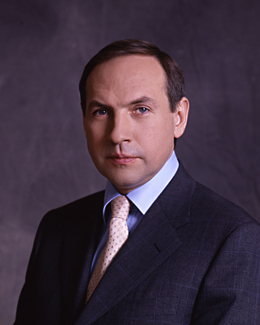
T. V. Zaitseva
School of Public Administration, Lomonosov Moscow State University
Russian Federation
Russian Federation
Tatiana V. Zaitseva, DSc (Economics), Professor, Deputy Head of Personnel Management Department
Moscow
References
1. Alekseeva M.V. (2025) The Digital Transformation of Public Administration Based on Artificial Intelligence. Administrativnoye pravo i protsess. No. 12. P. 16–19. DOI: 10.18572/2071-1166-2025-12-16-19
2. Ayvazyan N.A., Pogorelova P.V. (2026) Barriers to Digital Transformation of the Government Decision-Making System. Vestnik Akademii znaniy. No. 1(72). P. 665–668.
3. Bekhterev V.M. (2022) Rational Use of Human Energy in Labor. Institut psikhologii Rossiyskoy akademii nauk. Organizatsionnaya psikhologiya i psikhologiya truda. Vol. 7. No. 2. P. 254–297. DOI: 10.38098/ipran.opwp_2022_23_2_011
4. Bhushan N. (2025) Artificial Intelligence (AI) and its Role in Enhancing the Well-Being of Employees in the Public Sector: A Systematic Review. International Journal of Scientific Research and Modern Technology. Vol. 4. Is. 12. P. 13–18. DOI: 10.38124/ijsrmt.v4i12.1060
5. Bogdanov A.A. (1989) Tektologiya: Vseobshchaya organizatsionnaya nauka [Tectology: Universal organizational science. In 2 books. Book 1]. Moscow: Ekonomika.
6. Borovikova T.V., Kapustyan E.P. (2025) Formation of Professional Competencies of Civil Servants in the Context of Digitalization. Ekonomika i upravleniye: problemy, resheniya. Vol. 4. No. 3. P. 17–23. DOI: 10.36871/ek.up.p.r.2025.03.04.002
7. Fursov A.I., Lomaeva T.A. (2025) Personnel Management in Public and Municipal Administration: Challenges of the 21st Century. Pervyy ekonomicheskiy zhurnal. No. 8(362). P. 70–78.
8. Giacomini D., Grandi L. (2026) New Development: I Chose to Let the Machine Choose—the Rise of ‘AIcratism’. Public Money & Management. Vol. 46. Is. 3. P. 387–391. DOI: 10.1080/09540962.2025.2570740
9. Heidelberg R.L. (2026) Obeying Nobody: Public Service and the Ordinary Evil of Administration. Administration & Society. Vol. 58. Is. 3. P. 436–457. DOI: 10.1177/00953997261421492
10. Huang H., Ma T., Wu J. (2026) A Blessing or a Curse? Generative AI, Administrative Burdens, and Policy Alienation in Street-Level Bureaucracy. Governance. Vol. 39. Is. 2. DOI: 10.1111/gove.70110
11. Ignat’kova V.A., Gromova M.V. (2025) Directions for Improving the Professional Training of Civil Servants in the Russian Federation Based on the Analysis of Foreign Experience. Vestnik evraziyskoy nauki. Vol. 17. No. 6. Available at: https://esj.today/PDF/05ECVN625.pdf
12. Kudina M.V., Smirnov T.V. (2026) Training and Development of Civil Servants amid Digitalization. MIR (Modernizatsiya. Innovatsii. Razvitiye). Vol. 17. No. 2. P. 339–353. DOI: 10.18184/2079-4665.2026.17.2.339-353
13. Kulagina N.A., Lysenko A.N., Novikov S.P. (2022) Training of Personnel for the Digital Economy: Trends and Challenges. Vestnik Permskogo national’nogo issledovatel’skogo politekhnicheskogo universiteta. Sotsial’noekonomicheskiye nauki. No. 3. P. 148–160. DOI: 10.15593/2224-9354/2022.3.11
14. Maier S.F., Seligman M.E.P. (2016) Learned Helplessness at Fifty: Insights from Neuroscience. Psychological Review. No. 123. Is. 4. P. 349–367. DOI: 10.1037/rev0000033
15. Matveev A.A., Sheina A.Yu. (2025) Ethical Standards and Limits of the Application of Artificial Intelligence in Public. Ufimskiy gumanitarnyy nauchnyy forum. No. 1. P. 165–179. DOI: 10.47309/2713-2358-2025-1-165-179
16. Nagitta P. O., Mugurusi O., Obiccia P.A., Awuor E. (2022) Human-Centered Artificial Intelligence for The Public Sector: The Gate Keeping Role of the Public Procurement Professional. Procedia Computer Science. Vol. 200. P. 1084–1092.
17. Panova E.A., Tarasova E.Yu. (2025) Enhancing of Digital Competencies and Digital Literacy of Civil Servants in the Context of Digital Modernization of Public Administration. Gosudarstvennoye upravleniye. Elektronnyy vestnik. No. 112. P. 64–77. DOI: 10.55959/MSU2070-1381-112-2025-64-77
18. Porumbescu G.A., Trehan V., Edomwonyi A. (2025) Frontline Workers and Civic Tech: Bridging the Responsiveness Gap in Digital Client Encounters. Public Administration Review. Vol. 86. Is. 4. P. 1045–1059. DOI: 10.1111/puar.70066
19. Poyarkov R.A. (2025) Artificial Intelligence as a Tool for Optimizing Managerial Decision-Making Processes in the Russian Federation’s Public Service. Obshchestvo: politika, ekonomika, pravo. No. 2(139). P. 78–83. DOI: 10.24158/pep.2025.2.9
20. Selten F., Klievink B. (2024) Organizing Public Sector AI Adoption: Navigating between Separation and Integration. Government Information Quarterly. Vol. 41. Is. 1. DOI: 10.1016/j.giq.2023.101885
21. Semin A.N., Gusmanov R.U., Stovba E.V., Meshkova N.G. (2025) Application of Artificial Intelligence Technologies in the Public Authorities: Stovba and Prospects. ETAP: ekonomicheskaya teoriya, analiz, praktika. No. 5. P. 33–44. DOI: 10.24412/2071-6435-2025-5-33-44
22. Tyurina Yu.A. (2025) AI Technologies in Public Administration: Institutional Aspects and Application Risks. Upravlencheskoye konsul’tirovaniye. No. 5. P. 13–23.
23. Yarosh O.B., Nesterenko S.A. (2025) Opportunities for Effective Personnel Management in Public Service Bodies: Evidence from an Empirical Study. Gosudarstvennoye upravleniye i pravo. No. 4(8). P. 127–139.
24. Zenkl T. (2025) The Taming of Sociodigital Anticipations: AI in the Digital Welfare State. Frontiers in Sociology. Vol. 10. DOI: 10.3389/fsoc.2025.1556675
Review
For citations:
Zaitseva T.V. The Managerial Legacy of Human Sciences Russian School in the Age of AI: From the Concept of Personnel Management to the Social Parameters of the Civil Service Digital Transformation. Public Administration. E-journal (Russia). 2026;1(117):194-208. (In Russ.) https://doi.org/10.55959/MSU2070-1381-117-2026-194-208
Views:
76
JATS XML







 Email this article