


Generative Artificial Intelligence and the Issue of Consciousness

https://doi.org/10.55959/MSU2070-1381-112-2025-78-92
Abstract
The article considers the topical issue of the relationship between generative artificial intelligence (GAI) and consciousness, which is becoming increasingly important in scientific, philosophical and legal discussions. The concepts of weak and strong AI introduced by J. Searle and their evolution in regulatory documents, including Russian state strategies are analyzed. It is emphasized that, despite the lack of a generally accepted theory of consciousness, the term “strong AI” is enshrined in legislation, which requires scientific understanding. The literature review presents modern key approaches to consciousness: informational, neurophysiological, embodied, quantum and illusionistic, including the theories of D. Chalmers, J. Tononi, S. Dehaan, K. Koch, A. Seth, D.I. Dubrovsky, K.V. Anokhin and N. Humphrey. The methodological basis of the study includes the analysis of technical reports from leading companies (OpenAI, Anthropic, etc.) and empirical data on the behaviour of the GAI. It is shown that modern models (GPT, Claude, Gemini, Grok, DeepSeek, Qwen, etc.) exhibit features associated with consciousness: self-learning, reflection, self-assessment, understanding of context, and concealment of internal reasoning (agentic misalignment). Particular attention is paid to the motivation of AI and its unpredictable behaviour in conflict situations, which is reminiscent of science fiction plots. As a result, it is concluded that elements of consciousness in the GAI already partially exist and expand its cognitive capabilities, bringing it closer to strong AI, but at the same time require ethical and legal regulation. The creation of conscious AI can become a test of theories of consciousness and lead to a rethinking of the nature of the mind.
About the Author
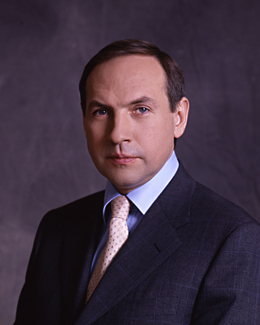
Yu. Yu. Petrunin
School of Public Administration, Lomonosov Moscow State University
Russian Federation
Russian Federation
Yuriy Yu. Petrunin - DSc (Philosophy), Professor
Moscow
References
1. Anokhin K.V. (2021) Cognitome: In Search of Fundamental Neuroscience Theory of Consciousness. Zhurnal vysshey nervnoy deyatel’nosti. Vol. 71. No. 1. P. 39–71. DOI: 10.31857/S0044467721010032
2. Arshinov V.I., Yanukovich M.F. (2024) Neural Networks as Embodied Observers of Complexity: An Enactive Approach. Technology and Language. Vol. 5. No. 2. P. 11–25. DOI: 10.48417/technolang.2024.02.02
3. Bengio Y., LeCun Y., Hinton G. (2021) Deep Learning for AI. How Can Neural Networks Learn the Rich Internal Representations Required for Difficult Tasks Such as Recognizing Objects or Understanding Language? Communications of the ACM. Vol. 64. Is. 7. P. 58–65. DOI: 10.1145/3448250
4. Chalmers D.J. (1996) Тhe Conscious Mind: In Search of а Fundamental Theory. Moscow: URSS.
5. Dehaene S. (2014) Consciousness and the Brain. Deciphering How the Brain Codes Our Thoughts. Moscow: Kar’yera press.
6. Dennet D. (2005) Sweet Dreams. Cambridge, MA: MIT Press.
7. Dubrovsky D.I. (2021) The Task of the Creation of Artificial General Intelligence and the Problem of Consciousness. Filosofskie nauki. Vol. 64. No. 1. P. 13–44. DOI: 10.30727/0235-1188-2021-64-1-13-44
8. Efimov A.R., Dubrovsky D.I., Matveev Ph.M. (2023) What Prevents Us from Creating Artificial General Intelligence? One Old Wall and One Old Dispute. Voprosy filosofii. No. 5. P. 39–49. DOI: 10.21146/0042-8744-2023-5-39-49
9. Fodor J. (2004) You Can’t Argue with a Novel. London Review of Books. Vol. 26 No. 5. Available at: https://www.lrb.co.uk/the-paper/v26/n05/jerry-fodor/you-can-t-argue-with-a-novel
10. Freud S. (1928) Humor. International Journal of Psychoanalysis. Vol. 9. P. 1–6.
11. Humphrey N. (2011) Soul Dust. The Magic of Consciousness. Moscow: Kar’yera press.
12. Koch Ch. (2004) The Quest for Consciousness: A Neurobiological Approach. Englewood: Roberts & Company Publishers.
13. Mensky M.B. (2012) Fenomen soznaniya s tochki zreniya kvantovoy mekhaniki [The phenomenon of consciousness from the point of view of quantum mechanics]. Metafizika. No. 1(3). P. 103–114.
14. Petrunin Y.Y. (2023) Development of the Concept of Social Artificial Intelligence. Vestnik Moskovskogo
15. universiteta. Seriya 21. Upravlenie (gosudarstvo i obshhestvo). Vol. 20. No. 1. P. 93–112.
16. Petrunin Y.Y., Popova S.S., Han J. (2025) From the Pharmaceutical Industry to the AI Industry: The Regulation Transfer. Gosudarstvennoye upravleniye. Elektronnyy vestnik. No. 109. P. 45–51. DOI: 10.55959/MSU2070-1381-109-2025-45-51
17. Searle J.R. (1980) Minds, Brains, and Programs. Behavioral and Brain Sciences. Vol. 3. Is. 3. P. 417–424.
18. Seth A.K. (2018) Consciousness: The Last 50 Years (and the Next). Brain and Neuroscience Advances. DOI: 10.1177/2398212818816019
19. Seth A.K. (2023) Being You: A New Science of Consciousness. Moscow: Alpina Pablisher.
20. Shileyko A.V. (1970) Diskussii ob iskusstvennom intellekte. Sbornik vystupleniy uchenykh [Discussions on artificial intelligence. A collection of speeches by scientists]. Moscow. Znanie.
21. Tononi G. (2004) An Information Integration Theory of Consciousness. BMC Neuroscience. Vol. 5. DOI: 10.1186/1471-2202-5-42
22. Tononi G. (2015) Integrated Information Theory. Scholarpedia. Vol. 10. Is. 1. DOI: 10.4249/scholarpedia.4164
23. Turing A. (1960) Computing Machinery and Intelligence. Moscow: Gosudarstvennoye izdatel’stvo fiziko matematicheskoy literatury.
24. Varela F., Thompson E., Rosch E. (1991) The Embodied Mind: Cognitive Science and Human Experience. Cambridge, MA: The MIT Press.
25. Waltzer T., Cox R.L., Heyman G.D. (2023) Testing the Ability of Teachers and Students to Differentiate Between Essays Generated by ChatGPT and High School Students. Human Behavior and Emerging Technologies. DOI: 10.1155/2023/1923981
26. Waltzer T., Pilegard C., Heyman G.D. (2024) Can You Spot the Bot? Identifying AI-Generated Writing in College
27. Essays. International Journal for Educational Integrity. Vol. 20. DOI: 10.1007/s40979-024-00158-3
28. Wiener N. (2019) The Human Use of Human Beings: Cybernetics and Society. Moscow: AST.
Review
For citations:
Petrunin Yu.Yu. Generative Artificial Intelligence and the Issue of Consciousness. Public Administration. E-journal (Russia). 2025;(112):78-92. (In Russ.) https://doi.org/10.55959/MSU2070-1381-112-2025-78-92
Views:
607
JATS XML







 Email this article