


Ethno-political Stability, Form of Government and Territorial Structure of the State: Features and Mechanisms of Interconnection

https://doi.org/10.24412/2070-1381-2023-98-114-122
Abstract
Political leaders are facing today the question of how to combine an ethnic diversity and regional differences inherent to the majority of modern states with assuring their territorial integrity. One of the tools for solving this problem is the use of ethno-federalism — the organization of the state’s territorial structure on the base of ethnic principle. The consequences of using this principle are quite controversial, but the elites of culturally heterogeneous states are inclined now to use it in one form or another. An important impact on harmonizing interethnic relations has also the choice of one or another form of government (parliamentary, presidential, mixed). The article discusses the strengths and weaknesses of each approach. Supporters of presidentialism claim that only a strong presidential power can assure stability in a culturally complex society. However, the government within this system is not a coalition, which reduces the chances of various ethnic communities being represented in it. The parliamentary system provides more possibilities for the participation of ethnic, religious and linguistic groups in the exercise of power. However, such a situation threatens to divide society into competing ethno-cultural communities. In general, it should be concluded that the relationship between the territorial structure of the state, forms of government and opportunities for harmonizing interethnic relations is complex, non-linear. At the same time, it can be argued that under any circumstances, the activities of effectively functioning democratic institutions — regular and fair elections, separation of powers — is a necessary condition for ensuring ethno-political stability in culturally heterogeneous societies.
About the Author
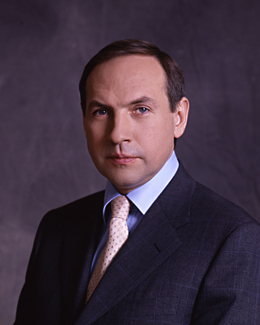
A. Yu. Polunov
Lomonosov Moscow State University
Russian Federation
Russian Federation
Alexander Yu. Polunov, DSc (History), Professor, Head of the Interethnic and Interfaith Relations Management Department, School of Public Administration
Moscow, Russian Fderation
References
1. Zaznayev O.I. (2021) Ethnic Conflict and Forms of Government: Contemporary Discussions. Polis. Politicheskiye issledovaniya. No. 1. P. 25–40. DOI: 10.17976/jpps/2021.01.03
2. Savinov L.V. (2021) Nationalities Policy and Ethnosecurity. Vestnik Rossiyskoy natsii. No. 3. P. 71–78.
3. Sanchat S.S. (2021) Ethnic Factor of the Environment of the Regional Political System. Vestnik Rossiyskoy natsii. No. 6. P. 94–100.
4. Kochetkov E.E. (2022) Promising Trajectories of the Evolution of a Unitary State: Between Regionalization and Federalization. Vestnik Rossiyskoy natsii. No. 1–2. P. 82–91.
5. Lijphart A. (1997) Democracy in Plural Societies a Comparative Exploration. M.: Aspekt-Press.
6. Mochalov A.N. (2021) In Search of the Origins of Multinational Federalism. Polis. Politicheskiye issledovaniya. No. 1. P. 94–109. DOI: 10.17976/jpps/2021.01.07
7. Shabayev Yu.P. (2022) The Anatomy of the Ethnopolitical Conflict. Politicheskaya ekspertiza: POLITEKS. Vol. 18. No. 1. P. 108–115. DOI: 10.21638/spbu23.2022.107
8. Dahl R. (1983) Federalism and the Democratic Process. Nomos. Vol. 25. P. 95–108.
9. Goode P. (2019) Russia’s Ministry of Ambivalence: The Failure of Civic Nation-Building in Post-Soviet Russia. Post-Soviet Affairs. Vol. 35. Is. 2. P. 140–160. DOI: 10.1080/1060586X.2018.1547040
10. Kymlicka W. (2001) Politics in Vernacular: Nationalism, Multiculturalism, and Citizenship. New York: Oxford University Press.
11. Matsuzato K. (2017). The Rise and Fall of Ethnoterritorial Federalism: A Comparison of the Soviet Union Russia), China and India. Europe-Asia Studies. Vol. 69. Is. 7. P. 1047–1069. DOI: 10.1080/09668136.2017.1374056
Review
For citations:
Polunov A.Yu. Ethno-political Stability, Form of Government and Territorial Structure of the State: Features and Mechanisms of Interconnection. Public Administration. E-journal (Russia). 2023;(98):114-122. (In Russ.) https://doi.org/10.24412/2070-1381-2023-98-114-122
Views:
95
JATS XML







 Email this article