


Approaches to Identifying and Conceptualizing Latent Sphere of Politics

https://doi.org/10.55959/MSU2070-1381-106-2024-170-182
Abstract
The article deals with hidden (latent) phenomena of politics, which may influence process of actors’ involvement into political interaction and taken by them decisions, as those remain to be not enough studied in modern science. Once consider a wide variety of academic papers from previous decades and different spheres of social science, it gets quite clear that there was rather permanent research interest for discovering the real role and various forms, through which the mechanisms for latent influencing state and its institutions can evolve. The factor of publicity, which turns to be on the one hand a key attribute for modern political reality, and on the other hand an element of social legitimizing relevant political actors’ intentions and efforts, causes some kind of watershed between a widely studied public sphere and a usually left aside from the positivistic-bound social knowledge latent sphere. The article analyses widely used notions of informality, unpublicity, shadow character of the taken within political dimension actions, which may be involved for describing corresponding facts appearing out of the immediate social control. Specific attention is paid to arguing the terminology of latency, which author finds more appropriate to characterize as a whole all the relations resulted from the close interests and their fulfilment among political actors as well as predetermined regeneration for the specific sphere of their (actors) secret interacting — the latent sphere of politics. On the basis of comparing different approaches appearing in actual theoretical discourse to rendering not proclaimed goals and mechanisms for political self-presentation by participants of modern power relations it develops some basic parameters to distinct latency, latent phenomena and latent sphere in modern political reality.
About the Author
A. E. Konkov
Lomonosov Moscow State University
Russian Federation
Russian Federation
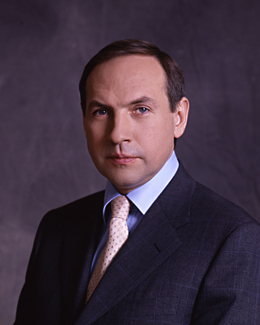
Alexander E. Konkov, PhD, Associate Professor, School of Public Administration
Moscow
References
1. Averina O.M. (2022) Political Interest as a Transformed Form of Socio-Economic Interest. Moskovskiy ekonomicheskiy zhurnal. Vol. 7. No. 9. P. 727–737. DOI: 10.55186/2413046X_2022_7_9_539
2. Axelrod R. (1986) An Evolutionary Approach to Norms. The American Political Science Review. Vol. 80. Is. 4. P. 1095–1111.
3. Barsukova S.Yu. (2006) Shadow Economy and Shadow Politics: The Mechanism of Merging. Working paper WP4/2006/01. Moscow: GU VShE.
4. Bobbio N. (1980) The Future of Democracy. Cambridge: Polity.
5. Bukhantsova A.V. (2021) The Problem of the Correlation of National and Political Interest. Mezhdunarodnyy zhurnal gumanitarnykh i estestvennykh nauk. No. 6–2. P. 66–69. DOI: 10.24412/2500-1000-2021-6-2-66-69
6. Easton D. (1965) A Systems Analysis of Political Life. New York: Wiley.
7. Gibson W. (1973) Factor Analysis, Latent Structure Analysis and Latent Profile Analysis. In: Lazarsfeld P., Henry N. (eds.) Readings in Mathematical Social Sciences. Moscow: Progress. P. 9–41.
8. Helmke G., Levitsky S. (2004) Informal Institutions and Comparative Politics: A Research Agenda. Perspectives on Politics. Vol. 2. Is. 4. P. 725–740.
9. Kochedykov I.E. (2024) The Phenomenon of Clientelism in Moldovan politics. Postsovetskie issledovaniya. Vol. 7. No. 2. P. 203–215.
10. Komarovskiy V.S. (1970) Nekotor·yye problemy izmereniya sotsial’nykh ustanovok [Some problems of measuring social attitudes]. Voprosy filosofii. No. 7. P. 24–31.
11. Konkov A.E. (2021) Latentnoye prostranstvo publichnoy politiki v sovremennom gosudarstve: v poiskakh teoreticheskoy modeli [Latent dimension of public policy in modern state: In search for a theoretical model]. Moscow: Argamak-Media.
12. Landauer T.K., Foltz P.W., Laham D. (1998) An Introduction to Latent Semantic Analysis. Discourse Processes. Vol. 25. Is. 2–3. P. 259–284. DOI: 10.1080/01638539809545028
13. Lazarsfeld P. (1954) A Conceptual Introduction to Latent Structure Analysis. In: Lazarsfeld P. (ed.) Mathematical Thinking in the Social Sciences. Glencoe: Free Press. P. 349–387.
14. Lebedeva M.M. (2024) In search of a New World Order: Interests of Actors of World Politics. Politicheskaya nauka. No. 2. P. 102–123. DOI: 10.31249/poln/2024.02.05
15. Ledeneva A. (2001) Unwritten Rules. How Russia Really Works. London: Center for European Reform.
16. Magidson J., Vermunt J.K. (2004) Latent Class Models. In: Kaplan D. (ed.) Handbook of Quantitative Methodology for the Social Sciences. New York: Sage. P. 175–198.
17. Melnikov K.V. (2021) Bureaucratic Patronage and Patterns of Administrative Recruitment of Regional Elites in Russia: A Comparative Network Analysis. Politicheskaya nauka. No. 4. P. 210–238. DOI: 10.31249/poln/2021.04.09
18. Merton R.K. (1957) Social Theory and Social Structure. Glencoe: Free Press.
19. Molyarenko O.A. (2016) Shadow Public Administration. Monitoring obshchestvennogo mneniya: Ekonomicheskie i social’nye peremeny. No. 3(133). P. 119–132. DOI: 10.14515/monitoring.2016.3.06
20. Nomokonov V.A., Filippov V.V. (2018) Tenevoye gosudarstvo i prestupnost’ [A shadow state as a criminogenic factor]. In: Dolgova A.I. (ed.) Kriminal’n·yye realii, reagirovaniye na nikh i zakon. Moscow: Rossiyskaya kriminologicheskaya assotsiatsiya. P. 18–26.
21. North D. (1990) Institutions, Institutional Change and Economic Performance. Cambridge: Cambridge University Press.
22. Panayotou T. (1997) Demystifying the Environmental Kuznets Curve: Turning a Black Box into a Policy Tool. Environment and Development Economics. Vol. 2. Is. 4. P. 465–484.
23. Russel B. (2003) A History of Western Philosophy. Novosibirsk: Sib. univ. izd-vo.
24. Sergunin A.A. (2010) Suverenitet: evolyutsiya kontsepta [Sovereignty: Evolution of the concept]. POLITEKS. Vol. 6. No. 4. P. 5–21.
25. Skorobogatova A.V. (2019) Institutional Corruption in Public Administration: Models and Practices. Gosudarstvennoye upravleniye. Elektronnyy vestnik. No. 75. P. 86–100.
26. Solovyov A.I. (2022) Kvazipoliticheskiye sistemy v prostranstve sovremennogo gosudarstva: sotsial’n·yye i politicheskiye posledstviya [Quasipolitical systems in modern state: Social and political consequences]. Politicheskoye v usloviyakh tsifrovykh transformatsiy: Materialy Vserossiyskoy nauchnoy konferentsii (s mezhdunarodnym uchastiyem) “Politicheskoye v usloviyakh tsifrovykh transformatsiy: filosofiya, nauka, tekhnologii”. Moscow: Aspekt-Press. P. 129–143.
27. Solovyov A.I. (2011) Latentnyye struktury upravleniya gosudarstvom ili igra teney na like vlasti [Latent structures of government or the play of shadows on the face of power]. Polis. Politicheskiye issledovaniya. No. 5. P. 70–98.
28. Solovyov A.I. (2021) Politika i upravlenie gosudarstvom. Ocherki teorii i metodologii [Policy and managing a state. Sketches of theory and methodology]. Moscow: Aspekt Press.
29. Tsygankov P.A. (2020) Glossary. N — national interest. Rossiya v global’noy politike. No. 1. P. 119–123.
30. Zhuravleva T.A. (2016) Latent Networks in Public Policy. Vlast’. Vol. 24. No. 6. P. 22–28.
Review
For citations:
Konkov A.E. Approaches to Identifying and Conceptualizing Latent Sphere of Politics. Public Administration. E-journal (Russia). 2024;(106):170-182. (In Russ.) https://doi.org/10.55959/MSU2070-1381-106-2024-170-182
Views:
264
JATS XML







 Email this article