


Customer-Centricity as a Vector of Trust Economy

https://doi.org/10.55959/MSU2070-1381-106-2024-116-126
Abstract
At present, quite a lot of research has been conducted in the field of trust economy by both well-known economists and sociologists and political scientists. And everyone emphasizes the importance of this socio-economic phenomenon for improving people’s lives, forming a sustainable society and the economy of countries. The work is devoted to the study of the trust economy as an environment that promotes the growth of economic benefits and the role of the client-centric approach within the framework of the “State for People” concept. The methodological basis of the study were the theoretical provisions of institutional economics, applied research in the field of game theory (using the example of the “prisoner’s dilemma” game) and behavioral economics, as well as practical examples and business solutions. The study considers aspects of the trust economy from the point of view of the importance of forming social capital. Models of various aspects of the trust economy are presented as fragments of the system of socio-economic relations. The model of the internal dynamics of the client-centric approach shows that the implementation of the approach itself and its formal consolidation in corporate activities is important, but not sufficient for forming a trust environment. No less important is the restructuring of mental models of all participants in economic relations. The importance of the information environment and the corresponding feedback between all actors is shown. It is described that information is also an economic good that is subject to formation, exchange and accumulation. Based on the results of the study, it is concluded that in the center of economic relations for the formation of economic goods, and in particular, in the relationships “person — state”, “citizen — state” is the person himself as an individual with certain mental models. The definition of the economy of trust as a synthetic added value (environment) to the relationship of economic agents, a citizen and the state, business and the state is proposed. The role and importance of social capital as a system of relationships in the creation and exchange of economic goods is noted. Client-centricity is defined as an information vector that has a specific direction and certain objective and subjective limitations.
About the Author
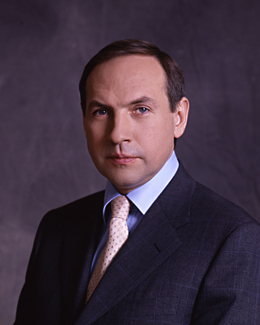
D. P. Arkalov
Ministry for Physical Culture and Sports of the Udmurt Republic
Russian Federation
Russian Federation
Dmitriy P. Arkalov, PhD, Deputy Minister for Physical Culture and Sports of the Udmurt Republic
Izhevsk
References
1. Acemoglu D., Robinson J. (2012) Why Nations Fail: The Origins of Power, Prosperity, and Poverty. New York: Crown Publishers.
2. Auzan A.A. (2022) Human Capital as a Driver for the Development of Globally Competitive Areas. Nauchnyye trudy Vol’nogo ekonomicheskogo obshchestva Rossii. Vol. 235. No. 3. P. 79–84. DOI: 10.38197/2072-2060-2022-235-3-79-84
3. Axelrod R. (1984) The Evolution of Cooperation. New York: Basic Books.
4. Balykina G.A. (2015) Distantsiya vlasti i sovremennyye kommunikativnyye praktiki upravleniya [Power distance and modern communicative management practices]. Sotsiokul’turnyye problemy yazyka i kommunikatsii. Saratov: Povolzhskiy institut upravleniya imeni P.A. Stolypina — filial FGBOU VPO “Rossiyskaya akademiya narodnogo khozyaystva i gosudarstvennoy sluzhby pri Prezidente Rossiyskoy Federatsii”. P. 26–31.
5. Bourdieu P. (1986) «The Forms of Capital». In: Richardson J.G. (ed.) Handbook of Theory and Research for the Sociology of Education. New York: Greenwood Press. P. 241–258.
6. Castaldo S., Premazzi K., Zerbini F. (2010) The Meaning(s) of Trust. A Content Analysis on the Diverse Conceptualizations of Trust in Scholarly Research on Business Relationships. Journal of Business Ethics. Vol. 96. P. 657–668. DOI: 10.1007/s10551-010-0491-4
7. Chernavskiy D.S. (2001) Sinergetika i informatsiya. Dinamicheskaya teoriya informatsii [Synergetics and information: Dynamic theory of information]. Moscow: Nauka.
8. Drogobytskiy I.N. (2019) Mental Models in Economics. Ekonomicheskaya nauka sovremennoy Rossii. No. 1(84). P. 7–15.
9. Drogobytskiy I.N. (2023) Systematization of National Education. Sistemnyy analiz v proyektirovanii i upravlenii: Sbornik nauchnykh trudov XXVI Mezhdunarodnoy nauchno-prakticheskoy konferentsii. V 3 ch. Sankt-Peterburg: Federal’noye gosudarstvennoye avtonomnoye obrazovatel’noye uchrezhdeniye vysshego obrazovaniya “Sankt-Peterburgskiy politekhnicheskiy universitet Petra Velikogo”. Part 3. P. 234–242. DOI: 10.18720/SPBPU/2/id23-481
10. Ermilova A.V. (2022) The Influence of Social Capital on the Duration of the Period of Professional Activity of Athletes of the Highest Achievements. Izvestiya vysshikh uchebnykh zavedeniy. Povolzhskiy region. Obshchestvennyye nauki. No. 4(64). P. 5–18. DOI: 10.21685/2072-3016-2022-4-1
11. Fukuyama F. (2006) Trust. The Social Virtues and the Path to Prosperity. Moscow: AST.
12. Hand D.J. (2020) Dark Data: Why What You Don’t Know Matters. Princeton: Princeton University Press.
13. Hofstede G. (1980) Culture’s Consequences: International Differences in Work-Related Values. Beverly Hills, CA: Sage.
14. Kosmin A.D., Kuznetsova A.P., Kosmina E.A. (2018) Public Trust as a Factor of Civilized Development of Society. Kreativnaya ekonomika. Vol. 12. No. 6. P. 733–746. DOI: 10.18334/ce.12.6.39194
15. Lukashevich E.V. (2014) “There Is No Way to Hold Distance”: Effectiveness of Communicative Practices of Public Authorities. Ekologiya yazyka i kommunikativnaya praktika. No. 1(2). P. 128–142.
16. Masyuk M.M., Bushueva M.A., Vasyukova L.K., Kiryanov A.E. (2018) Platforms for Digital Experience and Digital Transformation in an Innovative Economy. Resonances Science: Proceedings of articles the III International scientific conference. Krasnodar: Mezhdunarodnyy tsentr nauchno-issledovatel’skikh proyektov. P. 253–262.
17. Pelgander L., Öberg Ch., Barkenäs L. (2022) Trust and the Sharing Economy. Digital Business. Vol. 2. Is. 2. DOI: 10.1016/j.digbus.2022.100048
18. Perevoshchikov Yu.S. (1996) Ekonomicheskaya metrologiya. Poisk mery spravedlivosti. Chast’ I. Filosofiya budnichnoy zhizni [Economic metrology. The search for a measure of justice. Part I. The philosophy of everyday life]. Moscow, Izhevsk: IPK “Izdatel’stvo standartov”; “Persey”.
19. Putnam R. (2010) Social Capital: Measurement and Consequences. Canadian Journal of Policy Research. Vol. 2. P. 41–51.
20. Salikhov A.V. (2011). Psikhologicheskoye doveriye kak osnova ekonomicheskogo doveriya [Psychological trust as a basis for economic trust]. Baltiyskiy ekonomicheskiy zhurnal. No. 2(6). P. 156–164.
21. Sutherland R. (2019) Alchemy. The Dark Art and Curious Science of Creating Magic in Brands, Business, and Life. New York: Mariner Books.
22. Thaler R. (2015) Misbehaving: The Making of Behavioral Economics. New York: WW Norton & Company.
23. Tversky A., Kahneman D. (1992) Advances in Prospect Theory: Cumulative Representation of Uncertainty. Journal of Risk and Uncertainty. Vol. 5. P. 297–323. DOI: 10.1007/BF00122574
Review
For citations:
Arkalov D.P. Customer-Centricity as a Vector of Trust Economy. Public Administration. E-journal (Russia). 2024;(106):116-126. (In Russ.) https://doi.org/10.55959/MSU2070-1381-106-2024-116-126
Views:
339
JATS XML




 Email this article