


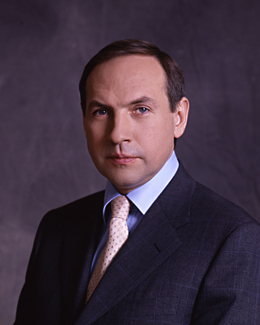
Andrey Andreevich Andreev — First Supervisor of the Soviet Housing Cooperation (1924–1925)

https://doi.org/10.24412/2070-1381-2023-100-62-72
Abstract
The article analyses the activity of the Soviet party figure A.A. Andreev in the field of housing cooperation. The aims is to identify his contribution to the formation and development of the new cooperative movement. The article is based on the archival materials, periodicals and memoirs, which are being introduced into science for the first time. In order to reach the aim, the author applied a systematic approach to the analysis of the sources, historical-typological, historical-genetic, historical-psychological methods. In February 1924 A.A. Andreev, who had held the post of the First Secretary of the Central Committee of the Union of Railway Workers before that time, became the Secretary of the Central Committee responsible for the development of the housing cooperation in the USSR. During his work in the Secretariat of the Central Committee he made a number of statements both on the pages of newspapers and from the tribunes of Party forums, in which he formulated a program of developing the Soviet housing cooperation. It implied the collective participation of party, economic, trade union and Komsomol structures in overcoming the housing crisis. At the same time, A.A. Andreev’s personal position was extremely vague and compromising. This did not contribute to strengthening the new form of housing construction in the system of the Soviet national economy and put it in a dependent position on the above-mentioned structures. The subject under consideration is a particular manifestation of a specific type of the Soviet economic manager. Further refinement and specification of the typology is possible if we study the entire multifaceted activity of A.A. Andreev in the highest Party and administrative positions, as well as its comparison with the work of other Soviet leaders.
About the Author
R. Yu. Chervyakov
Lomonosov Moscow State University
Russian Federation
Russian Federation
Ruslan Yu. Chervyakov, Postgraduate student, History Faculty, Lomonosov Moscow State University; Senior editor of Great Russian Encyclopedia
Moscow
References
1. Apalkov D.I. (2022) On the Role of Grigory Ordzhonikidze in the Inner-Party Struggle of the 1920s. Vestnik Permskogo universiteta. Seriya Istoriya. No. 3. P. 193–198.
2. Babichenko D.L. (1994) Pisateli i tsenzory. Sovetskaya literatura 1940-kh gg. pod politicheskim kontrolem TsK. [Writers and censors. Soviet literature of the 1940s under the political control of the Central Committee]. Moscow: ITs “Rossiya molodaya”.
3. Barkhatov A.A. (2023) Feliks Dzerzhinskiy. IYeromonakh revolyutsii. [Felix Dzerzhinsky. Hieromonk of the revolution]. Moscow: ROSSPEN.
4. Borisënok E.Yu. (2021) Stalinskiy prokonsul Lazar’ Kaganovich na Ukraine: apogey sovetskoy ukrainizatsii (1925–1928) [Stalin’s proconsul Lazar Kaganovich in Ukraine: The apogee of Soviet Ukrainianisation (1925–1928)]. Moscow: Rodina.
5. Devyatov S.V. (2000) Edinovlastiye v Rossii. Vozniknoveniye i stanovleniye (1922–1927 gg.) [Unanimity in Russia. Emergence and formation (1922–1927)] Moscow: MGUL.
6. Dmitrenko V.P. (1971) Torgovaya politika sovetskogo gosudarstva posle perekhoda k NEPu. 1921–1924 gg. [The trade policy of the Soviet state after the transition to the NEP] Moscow: Nauka.
7. Feldman M.A. (2021) The Soviet Elite of the 1930s: The Problem of Identification Diskurs-Pi. Vol. 18. No. 4. P. 29–45. DOI: 10.17506/18179568_2021_18_4_29
8. Fitspatrik Sh. (2021) On Stalin’s Team: The Years of Living Dangerously in Soviet Politics. Moscow: Izd-vo Instituta Gaydara.
9. Flakserman Yu.N. (1964) Gleb Mikhaylovich Krzhizhanovskiy [Gleb Mikhailovich Krzhizhanovsky]. Moscow: Nauka.
10. Gimpel’son E.G. (2000) NEP i sovetskaya politicheskaya Sistema [NEP and the Soviet political system]. Moscow: IRI RAN.
11. Gorlov V.N. (2020) Class Policy of the Soviet State during the Formation and Development of Housing Cooperatives in the 1920s and 1930s LOKUS: lyudi, obshchestvo, kul’tury, smysly. Vol. 11. No. 4. P. 13–29. DOI: 10.31862/2500-2988-2020-11-4-13-29
12. Gregory P.R. (2004) The Political Economy of Stalinism. Cambridge: Cambridge University Press.
13. Khlevnyuk O.V. (1996) Politbyuro. Mekhanizmy politicheskoy vlasti v 1930-e gg. [Politburo. Mechanisms of political power in the 1930s]. Moscow: ROSSPEN.
14. Khorosheva A.V. (2020a) Nikolay Ilyich Podvoisky and Soviet Physical Education in 1920’s. Diskussionnyye voprosy sovremennoy istoricheskoy nauki. Pamyati akademika RAN Yuriya Stepanovicha Kukushkina (1929–2019). Saint Petersburg: Aleteyya. P. 580–593.
15. Khorosheva A.V. (2020b) Formation of Soviet physical education and the confrontation between N.A. Semashko and N.I. Podvoisky. Reformy v povsednevnoy zhizni naseleniya Rossii: istoriya i sovremennost’. Materialy mezhdunarodnoy nauchnoy konferentsii. Saint Petersburg: Leningradskiy gosudarstvennyy universitet im. A.S. Pushkina. Vol. 2. P. 79–85.
16. Khromov S.S. (1977) F.E. Dzerzhinskiy na khozyaystvennom fronte. 1921–1926 [F.E. Dzerzhinsky on the economic front. 1921–1926]. Moscow: Mysl’.
17. Kochetova A.S. (2022) Lev Kamenev: «Ya ne soglasen» [Lev Kamenev: “I don’t agree”]. Moscow: ROSSPEN.
18. Kukushkin Yu.S. (ed.) (1989) Rezhim lichnoy vlasti Stalina: k istorii formirovaniya [Stalin’s regime of personal power: Towards a history of formation]. Moscow: MGU.
19. Mlechin L.M. (2021) Nikita Khrushchev [Nikita Khrushchev]. Moscow: Molodaya gvardiya.
20. Nikonov A.V. (2011) Posledniy latyshskiy strelok (Yan Ernestovich Rudzutak) [The last Latvian rifleman (Jan Ernestovic Rudzutak)]. Moscow: Mezhdunarodnyy izdatel’skiy tsentr “Etnosotsium”.
21. Nikonov V.A. (2016) Molotov: nashe delo pravoye [Molotov: our cause is just]. In 2 vol. Moscow: Molodaya gvardiya.
22. Pisarenko K.A. (2023) Sergey Kirov. Nesbyvshayasya nadezhda vozhdya [Sergei Kirov. The leader’s unfulfilled hope]. Moscow: ROSSPEN.
23. Shapiro L. (1990) The Communist Party of Soviet Union. London: Overseas Publications Interchange Ltd.
24. Sorokin A.K. (2021) “Prakticheskiy rabotnik” Georgiy Malenkov [“Practical Worker” Georgiy Malenkov]. Moscow: ROSSPEN.
25. Taubman W. (2003) Khrushchev: The Man and His Era. New York: W.W. Norton & Company.
26. Tufanov E.V., Karpenko I.N. (2022) The Socio-Cultural Image of the Representative of the Party-State Nomenclature — The Birth and Development of the 1920s–1930s (Based on the Materials of the North Caucasus). Vestnik Kalmytskogo universiteta. No. 3(55). P. 52–59. DOI: 10.53315/1995-0713-2022-55-3-52-59
27. Zhukov Yu.N. (2021) Grigoriy Zinov’yev. Otvergnutyy vozhd’ mirovoy revolyutsii [Grigory Zinoviev. Rejected leader of the world revolution]. Moscow: Kontseptual.
28. Zelenin I.E. (1972) Sovkhozy v pervoye desyatiletiye sovetskoy vlasti [State farms in the first decade of Soviet power]. Moscow: Nauka.
Review
For citations:
Chervyakov R.Yu. Andrey Andreevich Andreev — First Supervisor of the Soviet Housing Cooperation (1924–1925). Public Administration. E-journal (Russia). 2023;(100):62-72. (In Russ.) https://doi.org/10.24412/2070-1381-2023-100-62-72
Views:
89
JATS XML







 Email this article