


Civilization in the Face of Sociology

https://doi.org/10.55959/MSU2070-1381-104(S)-2024-113-122
Abstract
The article is a brief overview of the concepts that exist in sociological science from the moment of its inception to the present and related to civilizational issues. The peculiarities of this branch of knowledge, which arose during the Great Industrial Revolution, in the era of the formation of nation-states, led to the fact that for a long time sociologists did not use a civilizational approach, the idea of civilization prevailed as a certain stage in the development of society, opposing “barbarism”, in the age of Enlightenment (F. Guizot), and in the twentieth century (N. Elias). At the same time, it is possible to identify a certain attitude to civilizational issues in Marxism, and in an alternative approach to it, which the author calls technological (D. Bell, O. Tofler with J. Gelbraith adjacent to them), and in the concept of the “world-system” by I. Wallerstein, and in geoeconomics by F. Braudel. The article analyzes the contribution to the sociology of civilizations of the classics of the civilizational approach (N.Y. Danilevsky, O. Spengler, A. Toynbee, P. Sorokin). Special attention is paid to the “civilizational turn” in sociology in the 1970s, primarily related to the works of Sh. Eisenstadt and continued at the beginning of the XXI century by Aronson, as well as the concept of Russian civilization in the works of sociologists D. Nielsen and I. Yakovenko. The article raises theoretical questions about the civilizational approach from a sociological perspective, first of all, the scientific possibilities to identify specifically cultural and value cores of various civilizations, including Russian, to define Russian civilization in relation to the concepts of Eastern Christian civilization and Soviet civilization, as well as the degree of its universalism and autarkism.
About the Author
V. V. Fedorov
HSE University ; VCIOM (Russian Public Opinion Research Center)
Russian Federation
Russian Federation
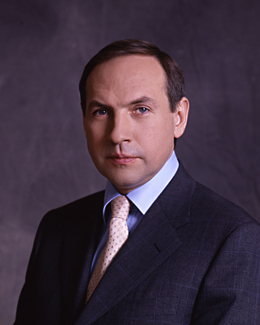
Valery V. Fedorov, PhD, Professor, Head of the Department of the All-Russian Center for the Study of Public Opinion, General Director
Moscow
References
1. Arnason Y. (2021) Civilizational Patterns and Civilizing Processes. Moscow: NLO.
2. Bell D. (1999) The Coming of Post-Industrial Society: A Venture in Social Forecasting. Moscow: Akademiya.
3. Brodel’ F. (2023) Civilisation matérielle, économie et capitalisme, XV–XVIII siècle. Moscow: Al’ma-Mater.
4. Danilevsky N.Ya. (2000) Rossiya i Evropa [Russia and Europe]. Moscow: OGIZ.
5. Durkheim E., Mauss M. (1971) Note on the Notion of Civilization. Social Research. Vol. 38. Is. 4. P. 808–813.
6. Eisenstadt S.N. (1993) Jewish Civilization: The Jewish Historical Experience in a Comparative Perspective. New York: State University of New York.
7. Eisenstadt S.N. (1998) Modernity and the Construction of Collective Identities. International Journal of Comparative Sociology. Vol. 39. № 1. Available at: https://brill.com/view/journals/ijcs/39/3/article-p138_9.xml
8. Eisenstadt S.N. (2001) Civilizational Dimension of Modernity. Modernity as a Distinct Civilization. International Sociology. Vol. 16. Is. 3. P. 320–340. DOI: 10.1177/02685800101600300
9. Eisenstadt S.N. (2003) Comparative Civilizations and Multiple Modernities. Leiden: Briyel Academic Publishers, 2003.
10. Elias N. (2001) Über den Prozeß der Zivilisation. Moscow: Universitetskaya kniga.
11. Engels F. (2019) Der Ursprung der Familie, des Privateigenthums und des Staats. Moscow: AST.
12. Galbraith J.K., Menshikov S. (1988) Capitalism, Communism and Coexistence. Moscow: Progress.
13. Guizot F. (2006) Histoire de la civilisation en France. Vol. 1. Moscow: Izdatel’skiy dom “Rubezhi XXI”.
14. Marx K. (1959) Zur Kritik der politischen Ökonomie. In: Marx K., Engels F. Sochineniya. Moscow: Politizdat. Vol. 13. P. 1–167.
15. Marx K., Engels F. (1955) Die deutsche Ideologie. In: Marx K., Engels F. Sochineniya. Moscow: Politizdat. Vol. 3. P. 7–544.
16. Nielsen D.A. (1989) Sects, Churches and Economic Transformations in Russia and Western Europe. International Journal of Politics, Culture, and Society. Vol. 2. Is. 4. P. 493−499.
17. Okara A. (2008) V okrestnostyakh novogo Konstantinopolya, ili vostochnokhristianskaya tsivilizatsiya pered litsom nove·yshego mirovogo khaoso-poryadka [In the vicinity of the new Constantinople, or Eastern Christian civilization in the face of the newest world chaos-order]. Tsivilizatsionnyye aktivy i tsivilizatsionnyye ramki natsional’noy rossiyskoy politiki. Materialy nauchnogo seminara. Moscow: Nauchnyy ekspert. No. 6(15). P 9–52.
18. Sorokin P.A. (2006) Sotsial’naya i kul’turnaya dinamika [Social and cultural dynamics] Moscow: Astrel’.
19. Spengler O. (2022) Der Untergang des Abendlandes. Umrisse einer Morphologie der Weltgeschichte. Moscoe: Akademicheskiy proyekt.
20. Toffler E. (2010) The Third Wave: The Classic Study of Tomorrow. Moscow: AST.
21. Toynbee A.J. (1991) A Study of History. Moscow: Progress.
22. Wallerstein I. (2006) Does India Exist? Logos. No. 5(56). P. 3–8.
23. Wallerstein I. (2008) Historical Capitalism. Capitalist Civilization. Moscow: KMK, 2008.
24. Yakovenko I., Muzykantskiy A. (2020) Manikheystvo i gnostitsizm: kul’turnyye kody russkoy tsivilizatsii [Manichaeism and Gnosticism: Cultural codes of Russian civilization]. Moscow: MTsNMO.
Review
For citations:
Fedorov V.V. Civilization in the Face of Sociology. Public Administration. E-journal (Russia). 2024;1(104):113-122. (In Russ.) https://doi.org/10.55959/MSU2070-1381-104(S)-2024-113-122
Views:
224
JATS XML







 Email this article