


Civilization Approach in Economic Researches

https://doi.org/10.55959/MSU2070-1381-104(S)-2024-62-78
Abstract
The proposed article presents the author’s view on how the civilizational approach to the analysis of economic processes developed and what it consisted of in various predominantly Russian-language literary sources of the 19th century. The author recognizes that the volume of sources containing evidence of such an approach is immense, so he focuses on those that he considers the most important and indicative for assessing the contribution of Russian science to the development of such a methodology of economic analysis, as well as the modern concept of human economy, to which some of the author’s earlier works were devoted. In the author’s opinion, the civilization approach already at the early stages of economic research helped to bring out non-material, cultural-psychological and moral aspects of economic behavior and formation of economic institutions. Most studies of the impact of civilizational development on the economy demonstrate a certain one-directionality, that is, they are built in the logic of a hierarchical world order: civilized nations are at the top of the pyramid of development, and uncivilized, barbaric nations are located somewhere at its base. The civilizational approach allows us to abandon the “economism”, which has become a template, based on the exclusive recognition of the primacy of material factors of social development. In addition, in the author’s opinion, there is an opportunity to raise the question of the correctness of the multipolarity concept, which can no longer describe in detail the formation of a new world order. The civilizational approach gives a chance to assess the processes of globalization and fragmentation in a new way, not as antagonistic processes, but as mutually conditioned. In general, the future development of a multi-civilizational world order and its conflict-free nature will be largely determined by the willingness of representatives of primarily Western civilization to recognize the need to gradually abandon the paradigm of universality of social development conditions in favor of manners identity paradigm, uniqueness of economic structure and behavior, and the importance of identity for economic development.
About the Author
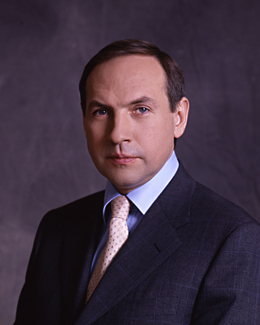
Vladimir D. Milovidov Миловидов
MGIMO University, Moscow ; Primakov National Research Institute of World Economy and International Relations, Russian Academy of Sciences
Russian Federation
Russian Federation
Vladimir D. Milovidov, DSc (Economics), Associate Professor, Deputy Director for Scientific Work
Moscow
References
1. Anikin A.V. (1989) Muza i mamona. Sotsial’no-ekonomicheskiye motivy u Pushkina [Muse and Mammon. Pushkin’s socio-economic motives]. Moscow: Mysl’.
2. Braudel F. (2014) Grammaire des civilisations. Moscow: Ves’ mir.
3. Butovskiy A.I. (1847) Opyt o narodnom bogatstve ili o nachalakh politicheskoy ekonomii [An experience of popular wealth or the beginnings of political economy]. Saint Petersburg: Tipografiya Vtorogo Otdeleniya Sobstvennoy E.I.V. Kantselyarii. Vol. 1.
4. Goldsmith R.W. (1987) Premodern Financial Systems. A Historical Comparative Study. Cambridge: Cambridge University Press.
5. Hadas E. (2007) Human Goods and Economic Evil. A Moral Approach to Dismal Science. Wilmington: ISI Books.
6. Hann C., Hart K. (2011) Economic Anthropology. History, Ethnography, Critique. Cambridge: Polity Press.
7. Kankrin E.F. (1894) Ocherki politicheskoy ekonomii i finansii [Essays on political economy and finance]. Saint Petersburg: Tip. Imperatorskoy Akademii nauk.
8. Kulisher I.M. (1919) Ocherki finansovoy nauki [Essays in financial science]. Petrograd: Knigoizdatel’stvo “Nauka i Shkola”.
9. Milovidov V. (2021) Pandemic in the Network Society: Network Readiness Increases Population Vulnerability to COVID-19 in Less Developed Countries. Acta Oeconomica. Vol. 71. Is. S1. P. 187–203.
10. Milovidov V.D. (2013a) Filosofiya finansovogo rynka [The financial market’s philosophy] Moscow: Magistr.
11. Milovidov V.D. (2013b) To Origins of “Humanitarian Economy”. Mirovaya ekonomika i mezhdunarodnyye otnosheniya. No. 7. P. 3–11.
12. Milovidov V.D. (2014) The Finance Unconscious: Is Everything in the Financial Market Driven by Consciousness? Mirovaya ekonomika i mezhdunarodnyye otnosheniya. No. 1. P. 32–41.
13. Mordvinov N.S. (1816) Rassuzhdeniya o mogushchikh posledovat’ pol’zakh ot uchrezhdeniya chastnykh po guberniyam bankov [Considerations on possible benefits from the establishment of private banks in the provinces]. Saint Petersburg: Tip. Imperatorskogo vospitatel’nogo doma.
14. Nikonov V.A. (2021) Rossiyskaya tsivilizatsiya [Russian civilization]. Moscow: Prosveshhenie.
15. Sedlacek T. (2011) Economics of Good and Evil. The Quest for Economic Meaning from Gilgamesh to Wall Street. Oxford: Oxford University Press.
16. Smith V. (2019) Humanomics. Moral Sentiments and the Wealth of Nations for The Twenty-First Century. Cambridge: Cambridge University Press.
17. Storch A. (2008) Kurs politicheskoy ekonomii, ili izlozheniye nachal, obuslovlivayushchikh narodnoye blagosostoyaniye. Razmyshleniya o prirode natsional’nogo dokhoda [A course of political economy, or an exposition of the principles which condition the national welfare. Reflections on the nature of national income]. Moscow: Izdatel’skiy dom “Ekonomicheskaya gazeta”.
18. Yanzhul I.I. (1895). Osnovnyye nachala finansovoy nauki: Ucheniye o gosudarstvennykh dokhodakh [Basic beginnings of financial science: The doctrine of public revenues]. Saint Petersburg: Tipografiya I. Stasyulevicha.
19. Zhukovskiy Yu.G. (1909) XIX vek i ego nravstvennaya kul’tura [The nineteenth century and its moral culture]. Saint Petersburg: Tipografiya V.O. Kirshbauma.
Review
For citations:
V. Civilization Approach in Economic Researches. Public Administration. E-journal (Russia). 2024;1(104):62-78. (In Russ.) https://doi.org/10.55959/MSU2070-1381-104(S)-2024-62-78
Views:
92
JATS XML







 Email this article