


Eurasian Civilization: Conceptual Geo-Economic Framework in the Context of a New World Order

https://doi.org/10.55959/MSU2070-1381-104(S)-2024-8-17
Abstract
The article is based upon the authors presentation at the All-Russian Conference with international participation “The Concept of the Russian Civilization” held at the School of Public Administration of Lomonosov Moscow State University on January 22–23, 2024. In addition to the basic propositions of the presentation the article contains certain ideas and methodological hypothesis regarding the framework for defining the limits of the Eurasian geopolitical space taking into consideration the on-going global and regional transformations. The successful integration of the geo-economic macro-region “Larger Eurasia” as a part of the economic regionalization in the contemporary political environment of competition of values means considering a wider array of factors beyond geo-economics: history, including the history of economic development, culture as well as the social aspects. The author promotes the position in favor of the integration of the mechanisms that are based upon the Eurasian theory and advanced mechanisms that form the economic and governing basis for the formation of the geoeconomic macro-regions. The trend for the formation of geoeconomic macro-regions was slowed down by the West but non dismantled completely. Those factors are directly involved in the issue of Eurasian frontier and the mechanism of its geo-economic demarcation. Special attention in the article is paid to the issue of the Western border (frontier) of Eurasia. The issue is addressed basing on the authors hypothesis about the existence of “Dnieper proto-fault” that integrates civilizational (socio-cultural) and spatial geo-economic aspects. The fundamental transformations’ potential including the force which lies in this proto-fault has already manifested itself during the Special military operation that Russia has started in February 2022.The effective analysis is needed not only for the interdisciplinary approach but flexible and creative adaptation of the philosophical heritage of founders of the Eurasian theory updating it to the newly emerged reality and relevant to the special, geography-based political and economic architecture.
About the Author
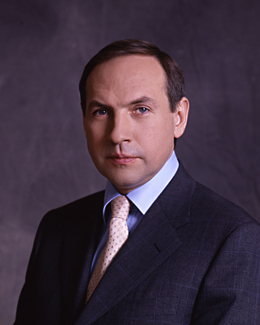
D. G. Evstafiev
Institute of Media, Higher School of Economics; Peoples’ Friendship University of Russia (RUDN)
Russian Federation
Russian Federation
Dmitry G. Evstafiev, PhD, Professor, Professor of Law Institute
Moscow
References
1. Brednikov O., Abashin S. (eds.) (2021) “Zhit’ v dvukh mirakh”: pereosmyslyaya transnatsionalizm i translokal’nost’ [“Living in two worlds”: Rethinking transnationalism and translocality]. Mosсow: Novoe literaturnoe obozrenie.
2. Cooper R. (2010) The Breaking of Nations: Order and Chaos in the Twenty-First Century. Moscow: Moskovskaya shkola politicheskikh issledovaniy.
3. Danilevsky N.Ya. (1991) Rossiya i Evropa [Russia and Europe]. Mosсow: Kniga.
4. Ergin D. (2021) Novaya karta mira. Energeticheskiye resursy, menyayushchiysya klimat i stolknoveniye natsiy [The new map: Energy, climate, and the clash of nations]. Moscow: Intellektual’naya literatura.
5. Evstafiev D.G. (2019) Globalization and New Civilizational Faults: Risks and Prospects for Russia and Eurasia. Geopolitika i ekogeodinamika regionov. Vol. 5(15). No. 1. P. 22–33.
6. Fukuyama F. (2019) Identity: The Demand for Dignity and the Politics of Resentment. Moscow: Al’pina Pablisher.
7. Gumilev L.N. (2019) Etnogenez i biosfera zemli [Ethnogenesis and the biosphere of the Earth]. Moscow: Azbuka.
8. Huntington S. (1996) The Clash of Civilizations and the Remaking of World Order. New York: Simon&Shuster.
9. Kofner Yu. (2018) Geografiya i geopolitika Bol’shoy Evrazii [Geography and geopolitics of Greater Eurasia]. Soobshchestvo Bol’shaya Evraziya. Available at: https://gea.site/2018/05/687/?ysclid=lsycwkwg7v325565036
10. Kudryashova D.A. Influence of West on Post-Soviet Space: Progressive Movement to Change Cultural Code. Blizhniy i Postsovetskiy Vostok. No. 1(1). P. 113–120. DOI: 10.31249/j.2949-2408.2023.01.07
11. Spence M. (2013) The Next Convergence: The Future of Economic Growth in a Multispeed World. Moscow: Izdatel’stvo Instituta Gaydara.
Review
For citations:
Evstafiev D.G. Eurasian Civilization: Conceptual Geo-Economic Framework in the Context of a New World Order. Public Administration. E-journal (Russia). 2024;1(104):8-17. (In Russ.) https://doi.org/10.55959/MSU2070-1381-104(S)-2024-8-17
Views:
235
JATS XML







 Email this article